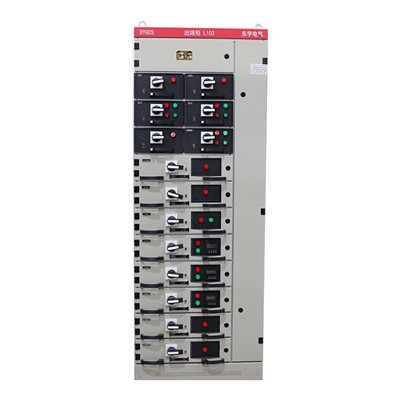
Hey there! As a supplier of MNS Outgoing Cabinets, I'm super stoked to chat about the communication interfaces of these bad boys. MNS Outgoing Cabinets are a crucial part of electrical distribution systems, and understanding their communication interfaces is key to getting the most out of them.
Let's start with the basics. The MNS Outgoing Cabinet is designed to distribute electrical power from a main source to various loads. It's like the middleman in the electrical world, making sure that power gets where it needs to go. And just like any good middleman, it needs to be able to communicate effectively.
One of the most common communication interfaces in MNS Outgoing Cabinets is the Modbus protocol. Modbus is a simple and widely used communication protocol that allows different devices to talk to each other. It's like a universal language for electrical equipment. With Modbus, the MNS Outgoing Cabinet can send and receive data such as voltage, current, and power consumption. This data can be used for monitoring and control purposes, helping you keep an eye on your electrical system and make informed decisions.
Another important communication interface is Profibus. Profibus is a high-speed communication protocol that is commonly used in industrial automation. It allows for fast and reliable data transfer between devices, making it ideal for applications where real-time data is crucial. In the context of MNS Outgoing Cabinets, Profibus can be used to connect the cabinet to other devices in the electrical system, such as programmable logic controllers (PLCs) and human-machine interfaces (HMIs). This enables seamless integration and control of the entire system.
Ethernet is also a popular communication interface for MNS Outgoing Cabinets. Ethernet is a standard network protocol that is used in many different applications, from home networks to industrial systems. With Ethernet, the MNS Outgoing Cabinet can be connected to a local area network (LAN) or the internet, allowing for remote monitoring and control. This is especially useful for large-scale electrical systems or systems that are located in multiple locations.
In addition to these standard communication interfaces, some MNS Outgoing Cabinets also support proprietary communication protocols. These protocols are developed by the manufacturer and are designed to provide specific features and functionality. For example, some cabinets may support a proprietary protocol that allows for advanced monitoring and control of the cabinet's internal components.
Now, let's talk about why these communication interfaces are so important. First and foremost, they allow for better monitoring and control of the electrical system. By being able to access real-time data about the cabinet's performance, you can quickly identify and address any issues that may arise. This can help prevent downtime and reduce maintenance costs.
Secondly, communication interfaces enable seamless integration with other devices in the electrical system. Whether it's a PLC, an HMI, or a remote monitoring system, the MNS Outgoing Cabinet can communicate with these devices to ensure that the entire system is working together efficiently. This can improve the overall performance and reliability of the electrical system.


Finally, communication interfaces provide the flexibility to adapt to changing requirements. As technology evolves and new applications emerge, the MNS Outgoing Cabinet can be easily updated to support new communication protocols and features. This ensures that your electrical system remains up-to-date and competitive.
If you're interested in learning more about the communication interfaces of MNS Outgoing Cabinets, or if you're looking to purchase a cabinet for your electrical system, I'd love to hear from you. As a supplier, I have a wealth of knowledge and experience in this area, and I'm happy to help you find the right solution for your needs.
You can find more information about MNS Incoming Cabinet, MNS Outgoing Cabinet, and MNS Tie Cabinet on our website. These links will take you to detailed product pages where you can learn more about the features and specifications of each cabinet.
So, if you're ready to take your electrical system to the next level, don't hesitate to reach out. We're here to help you make the right choice and ensure that your electrical system is running smoothly and efficiently.
References:
- Electrical Engineering Handbook, Third Edition
- Industrial Automation: A Practical Guide