

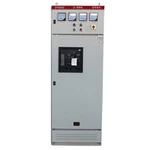
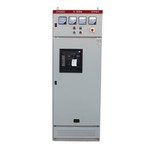

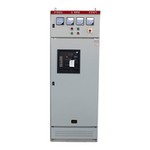
High Voltage Switch Gear
Product Overview
Our High Voltage Metal-Clad Withdrawable Switchgear is a metal-enclosed, compartmentalized electrical distribution system engineered for primary and secondary high-voltage power networks. It is designed to handle circuit protection, switching, load isolation, electrical measurement, and system control under rigorous operating conditions.
Constructed with a fully compartmentalized metallic architecture, the switchgear houses a withdrawable circuit breaker compartment, main busbar compartment, cable compartment, and low-voltage control compartment. It accommodates vacuum circuit breakers, current transformers, voltage transformers, earthing switches, surge protection devices, numerical protection relays, and metering instrumentation.


Construction & Configuration
Metal-Clad Enclosure
The switchgear enclosure is manufactured from heavy-gauge coated steel sheets assembled through precise structural bolting and high-strength riveting, eliminating thermal welding distortions and ensuring long-term structural rigidity and atmospheric corrosion resistance.
Withdrawable Circuit Breaker Compartment
The circuit breaker is mounted on a robust withdrawable truck operating within a dedicated, pressure-relieved compartment. The precision propulsion mechanism provides clearly defined operating positions: Service Position, Test Position, and Disconnected/Withdrawn Position.
Main Busbar Compartment
Main busbars are housed in an independent upper compartment and manufactured from high-conductivity electrolytic copper. Dimensions, joint configurations, and silver/tin plating are engineered to meet continuous current demands and high short-circuit thermal-mechanical stresses.
Cable Compartment
The cable compartment provides adequate internal volume for high-voltage cable terminations, surge arresters, current/voltage transformers, and mechanical earthing switches, ensuring safe cable access and high clearance margins.
Low-Voltage Control Compartment
Physically segregated from high-voltage compartments, the front low-voltage relay panel houses numerical protection relays, energy meters, terminal blocks, auxiliary control wiring, and interlocking logic components.
Withdrawable Circuit Breaker Design:
Precision guide rails and lead-screw mechanisms allow safe transition between operational positions with the high-voltage compartment door securely closed.
Compartmentalized Metallic Structure:
Complete physical segregation between the circuit breaker, main busbars, cables, and low-voltage controls prevents fault propagation and ensures localized containment.
Foolproof Mechanical Interlocking:
Five-position interlocking architecture prevents operational misbehavior:
Cannot rack in/out the circuit breaker when closed.
Cannot close the circuit breaker when the truck is in an intermediate position.
Cannot open the earthing switch when the circuit breaker is closed.
Cannot close the circuit breaker when the earthing switch is closed.
Cannot access the cable compartment unless the earthing switch is closed and locked.
Flexible Cable Termination:
Configurable for top or bottom cable entry, accommodating single-core or three-core high-voltage cables with dedicated support brackets.
Optional Thermal Monitoring:
Integration of fiber-optic or wireless temperature sensors at busbar joints and main contact clusters for continuous thermal anomaly tracking.
Technical Specifications
|
Technical Parameter |
Standard Configuration Range |
|
Product Type |
High Voltage Metal-Clad Withdrawable Switchgear |
|
Rated Voltage (Ur) |
Up to 40.5 kV (Project Specific) |
|
Rated Frequency |
50 Hz / 60 Hz |
|
Rated Normal Current (Ir) |
Up to 4000 A (Busbar & VCB) |
|
Rated Short-Time Withstand Current (Ik) |
Up to 50 kA / 3 s |
|
Circuit Breaker Type |
Withdrawable Vacuum Circuit Breaker (VCB) |
|
Main Busbar Material |
High-Conductivity Electrolytic Copper |
|
Enclosure Protection Class |
IP4X (Outer Enclosure), IP2X (Internal Partitions) |
|
Enclosure Material |
Coated Steel Sheet (Min. 2.0 mm thickness) |
|
Internal Arc Classification (IAC) |
Available upon request and design validation |
|
Applicable Standards |
IEC 62271-200, IEC 62271-100, IEEE C37.20.1 |
Applications
Utility Substations:
Primary and secondary regional distribution substations handling grid step-down transformations and feeder management.
Heavy Industrial Plants:
Steel mills, mining operations, petrochemical refineries, and large-scale manufacturing facilities requiring heavy-duty motor starting and robust power distribution.

Renewable Energy Facilities:
Wind farm collector substations, utility-scale photovoltaic (PV) generation plants, and battery energy storage system (BESS) integration skids.
Critical Infrastructure:
Hyperscale data centers, airports, and municipal water treatment plants requiring high-reliability power continuity and rapid fault isolation.
Manufacturing & Quality Control
Our production processes integrate advanced automated machinery and rigorous inspection protocols to ensure zero-defect delivery:
CNC Sheet Metal Processing: High-precision CNC laser cutting, punching, and bending machines maintain tight dimensional tolerances across all enclosure components.
Busbar Fabrication: Automated copper busbar punching, bending, deburring, and silver/tin electroplating lines minimize electrical contact resistance.
Structural Assembly: Precision mechanical assembly using specialized jigs and high-strength fasteners to guarantee structural alignment and interlock accuracy.
Routine & Factory Acceptance Testing (FAT): Every switchgear lineup undergoes comprehensive testing prior to dispatch:
Dielectric voltage withstand tests on main and secondary circuits.
Measurement of main circuit resistance using micro-ohmmeters.
Mechanical operation, timing, and lifecycle verification checks.
Interlock logic simulation and functional testing.
Secondary wiring insulation and polarity checks.
Third-party witness testing (e.g., SGS, TÜV, Bureau Veritas) can be arranged upon request.
Customization & Project Support
We engineer switchgear configurations to match exact single-line diagrams (SLD) and site footprint constraints:
Electrical Customization:
Voltage levels, normal current ratings, short-circuit withstand capacity, feeder quantities, relay brand integration (Schneider, ABB, Siemens, SEL, etc.), and CT/VT ratios.
Mechanical Customization:
Cabinet dimensions, cable entry direction, busbar layout (single, dual, or sectionalized), base channel design, and color finishes.
Engineering Documentation Package:
Provision of comprehensive project submittals, including Single-Line Diagrams (SLD), General Arrangement (GA) drawings, electrical schematics, terminal schedules, wiring diagrams, and factory test reports.
FAQ