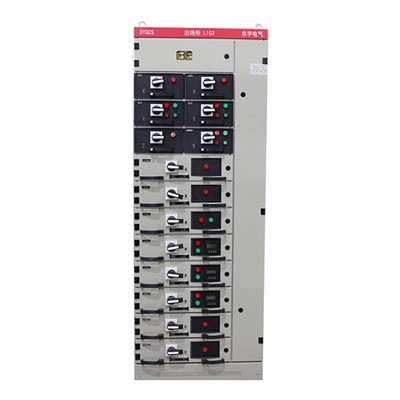
In the modern industrial landscape, the ability to remotely control electrical equipment has become a game - changer. As a supplier of MNS Incoming Cabinets, I've witnessed firsthand the growing demand for remote control solutions. This blog post aims to provide a comprehensive guide on how to remotely control the MNS Incoming Cabinet, exploring the technologies, benefits, and steps involved.
Understanding the MNS Incoming Cabinet
Before delving into remote control methods, it's essential to understand what an MNS Incoming Cabinet is. The MNS Incoming Cabinet is a crucial part of the low - voltage switchgear system. It is responsible for receiving electrical power from the main power source, such as the grid, and distributing it to various sections of the electrical installation. It typically contains circuit breakers, busbars, and other protective and control devices.
There are also related cabinets in the MNS system, such as the MNS Capacitor Cabinet, which is used for power factor correction, the MNS Tie Cabinet, which connects different sections of the switchgear, and the MNS Outgoing Cabinet, which distributes power to specific loads.
Technologies for Remote Control
1. SCADA Systems
Supervisory Control and Data Acquisition (SCADA) systems are widely used for remote control of electrical equipment, including MNS Incoming Cabinets. A SCADA system consists of a central control station, remote terminal units (RTUs), and communication networks. The RTUs are installed in the MNS Incoming Cabinet to collect data such as voltage, current, and breaker status. This data is then transmitted to the central control station via communication channels like Ethernet, Wi - Fi, or cellular networks. At the central control station, operators can monitor the cabinet's status in real - time and issue control commands, such as opening or closing circuit breakers.
2. Internet of Things (IoT)
The IoT has revolutionized the way we interact with electrical equipment. By equipping the MNS Incoming Cabinet with IoT sensors and devices, it can be connected to the internet. These sensors can measure various parameters and transmit the data to a cloud - based platform. Through a web - based interface or a mobile application, users can access the data and control the cabinet from anywhere in the world. For example, an IoT - enabled MNS Incoming Cabinet can send an alert to the user's smartphone if there is an abnormal voltage or current reading.


3. Modbus Protocol
Modbus is a widely used communication protocol in the industrial automation field. It allows different devices, such as the MNS Incoming Cabinet and a control system, to communicate with each other. By using Modbus, the control system can read data from the cabinet, such as the status of circuit breakers and the values of electrical parameters, and send control commands to the cabinet. Modbus can be implemented over different physical media, such as serial communication (RS - 485) or Ethernet.
Benefits of Remote Control
1. Enhanced Safety
Remote control eliminates the need for personnel to be physically present near the MNS Incoming Cabinet, especially in hazardous environments. For example, in a factory with high - voltage electrical systems, operators can control the cabinet from a safe distance, reducing the risk of electrical accidents.
2. Improved Efficiency
With remote control, operators can quickly respond to electrical faults or changes in the power system. They can open or close circuit breakers without having to travel to the cabinet location, which can save time and minimize downtime.
3. Real - Time Monitoring
Remote control systems allow for continuous monitoring of the MNS Incoming Cabinet's status. Operators can access real - time data on electrical parameters, which helps in detecting potential problems early and taking preventive measures.
Steps to Remotely Control the MNS Incoming Cabinet
1. Select the Appropriate Remote Control Technology
Based on the specific requirements of the application, choose the most suitable remote control technology. Consider factors such as the distance between the control station and the cabinet, the level of data security required, and the existing infrastructure.
2. Install the Necessary Hardware
Install the RTUs, IoT sensors, or Modbus communication modules in the MNS Incoming Cabinet. Ensure that the hardware is properly connected and configured according to the manufacturer's instructions.
3. Set Up the Communication Network
Establish a reliable communication network between the MNS Incoming Cabinet and the control station. This may involve configuring Ethernet switches, Wi - Fi routers, or cellular modems. Make sure that the network has sufficient bandwidth and security measures in place.
4. Configure the Control System
Configure the SCADA system, IoT platform, or Modbus - compatible control system to communicate with the MNS Incoming Cabinet. Define the data points to be monitored and the control commands to be issued.
5. Test the Remote Control System
Before putting the remote control system into operation, conduct thorough testing. Verify that the data is being accurately transmitted and received, and that the control commands are being executed correctly.
Considerations for Remote Control
1. Data Security
Since the MNS Incoming Cabinet is an important part of the electrical system, data security is of utmost importance. Implement measures such as encryption, access control, and firewalls to protect the communication network and the control system from unauthorized access.
2. Redundancy
To ensure the reliability of the remote control system, consider implementing redundancy. This may involve having backup communication channels, RTUs, or control systems. In case of a failure in one component, the system can still operate normally.
3. Maintenance and Support
Regular maintenance of the remote control system is essential to ensure its proper functioning. Provide training to the operators on how to use and maintain the system. Also, have a support team available to handle any technical issues that may arise.
Conclusion
Remote control of the MNS Incoming Cabinet offers numerous benefits in terms of safety, efficiency, and real - time monitoring. By selecting the appropriate technology, installing the necessary hardware, setting up a reliable communication network, and configuring the control system, you can achieve effective remote control. As a supplier of MNS Incoming Cabinets, we are committed to providing high - quality products and solutions for remote control. If you are interested in purchasing MNS Incoming Cabinets or need more information about remote control solutions, please feel free to contact us for further discussion.
References
- Electrical Power Systems Handbook, Third Edition, by Turan Gonen
- Industrial Automation and Control Handbook, Second Edition, by David A. Bell