

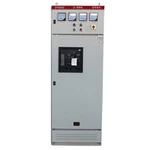
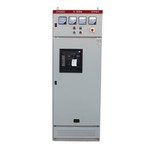

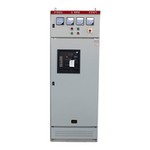
Low Voltage Distribution Box
Product Overview
The Low Voltage Distribution Box provides secure circuit protection, power switching, and secondary power distribution for industrial, commercial, and utility power systems. Engineered for alternating current networks up to 690V AC (50/60Hz) with rated operational currents up to 630A, this enclosure line supports incoming mains supply, sub-distribution, and motor control configurations within electrical power infrastructure.
Electrical engineering teams specify this unit when system installation requires strict arc fault containment, reliable thermal dissipation, and verified mechanical protection against environmental ingress.





Construction and Configuration
Enclosure structural integrity relies on precision sheet metal fabrication and modular internal frame assembly.
Enclosure Body:
Formed from cold-rolled steel or corrosion-resistant stainless steel with typical thickness ranging from 1.2mm to 2.0mm. Automated laser cutting and CNC robotic bending maintain structural dimensional tolerances.
Surface Treatment:
Degreased, phosphated, and finished with exterior-grade electrostatic polyester powder coating applied uniformly or specified stainless-steel finish to withstand standard industrial weathering and salt spray exposure.


Internal Framework:
Modular mounting systems, rigid mounting plates, and high-purity copper busbar supports separated by flame-retardant insulating barriers.
Sealing System:
Continuous poured-in-place polyurethane door gaskets maintaining compression memory and ingress protection across wide operational temperature ranges.
Key Features
Modular Internal Layout: Accommodates mixed integration of molded case circuit breakers (MCCBs), miniature circuit breakers (MCBs), residual current devices (RCDs), meters, surge protective devices (SPDs), contactors, relays, and terminal blocks without requiring on-site structural modifications.
Thermal Management Architecture: Optimized internal volume configuration with optional louvered ventilation panels or thermal management interfaces to prevent switchgear thermal derating.
Cable Entry Flexibility: Removable top, bottom, side, or customized gland plates allowing flexible cable routing and entry layout based on site wiring needs.
Access Security: Key-operated industrial swing-handle locking systems restricting unauthorized access to live electrical components.
Grounding Continuity: Integrated earthing connection points engineered directly onto the enclosure body, door, and internal mounting plate to ensure electrical safety continuity.
Technical Specifications
|
Technical Parameter |
Specification |
|
Product Type |
Low-voltage distribution box / power distribution enclosure |
|
Rated Operational Voltage (Ue) |
Up to 690V AC |
|
Rated Insulation Voltage (Ui) |
Up to 1000V AC |
|
Rated Current (In) |
Up to 630A |
|
Short-Circuit Withstand Current (Icw) |
Up to 50kA / 1s, configuration dependent |
|
Degree of Protection |
IP54 / IP65, configuration dependent |
|
Impact Protection |
IK10, where specified and verified |
|
Enclosure Material |
Cold-rolled steel / stainless steel |
|
Typical Sheet Thickness |
1.2mm to 2.0mm |
|
Main Components |
MCCB, MCB, RCD, meter, SPD, contactor, relay, terminal block, etc. |
|
Cable Entry |
Top / bottom / side / customized |
|
Installation |
Wall-mounted, floor-standing, or other specified construction |
|
Surface Finish |
Powder-coated steel or specified stainless-steel finish |
|
Applicable Standards |
To be confirmed according to the selected assembly and project requirements |
Renewable Energy Systems:
Can be configured for auxiliary AC distribution, protection, metering, and local feeder circuits within solar, wind, and other renewable-energy installations where the required electrical ratings and enclosure conditions are defined.
Outdoor and Harsh-Environment Installations:
Stainless-steel or enhanced-sealing configurations can be considered for applications requiring additional resistance to moisture, dust, or specified environmental conditions. Final material, coating, sealing, and IP requirements should be selected according to the actual installation environment.
Commercial Electrical Distribution:
Used for secondary power distribution, HVAC circuits, lighting distribution, facility equipment, and other low-voltage feeder applications in commercial buildings.
Industrial Manufacturing:
Configured for machine power feeds, production equipment, plant utilities, motor circuits, and local electrical distribution where the required voltage, current, protection devices, and enclosure conditions can be specified.
Utility and Infrastructure Systems:
Suitable for local distribution and control circuits used in water treatment, municipal infrastructure, utility facilities, and other electrical service installations.
Customization and Project Support
Projects require precise alignment with electrical schematics and power system layouts. Technical support includes:
Engineering Drawing Review:
Generation and verification of 2D and 3D technical submittal drawings for project approval prior to production.
Custom Cutouts:
Precision mechanical machining of door cutouts, meter apertures, indicator light placements, and gland plate openings matching exact project single-line diagrams.
Component Integration:
Factory installation and wiring of specified circuit breakers, meters, terminal strips, and internal copper busbar configurations according to project bills of materials.
Manufacturing and Quality Control
Production operations utilize automated manufacturing cells to ensure consistent physical and electrical performance.
Welding Execution:
Robotic welding cells ensure uniform, pressure-tight structural joints without thermal distortion.
Coating Verification:
Automated electrostatic spray application followed by adhesion testing and dry-film thickness measurement.
Fabrication Line:
CNC punch presses and automated fiber lasers execute sheet blanking and cutting, followed by precision panel bending.
Factory Acceptance Testing (FAT):
Assembled distribution boxes undergo dielectric withstand testing, protective conductor continuity verification, and mechanical inspection prior to crated packaging.
FAQ